Dry Ice Blasting in Knoxville, TN: The Industrial Cleaning Method That Leaves Nothing Behind
What if you could deep-clean industrial equipment and have it back online in hours, not days? What if you could remove years of grease, oil, and carbon buildup without disassembling machinery, without creating secondary waste, and without risking damage to sensitive components?
For manufacturers and industrial facilities in Knoxville and Maryville, this isn't a hypothetical scenario—it's the reality of dry ice blasting. While traditional cleaning methods force you to choose between thorough cleaning and operational efficiency, dry ice blasting delivers both. It's a revolutionary approach that uses recycled CO₂ pellets to clean equipment so effectively that the ice itself disappears, leaving only clean machinery and the debris you wanted removed in the first place.
If your facility struggles with equipment cleaning that creates excessive downtime, damages sensitive components, or generates mountains of secondary waste, it's time to understand why dry ice blasting is rapidly becoming the preferred method for industrial maintenance across East Tennessee.
What is Dry Ice Blasting? Science Meets Industrial Cleaning
At its core, dry ice blasting is elegantly simple: recycled CO₂ pellets are accelerated through compressed air and directed at contaminated surfaces. But what happens on impact is where the science gets interesting—and where this method outperforms every traditional cleaning approach.
The key difference lies in sublimation. Unlike sandblasting media that stays behind or water that needs to drain away, dry ice transforms directly from solid to gas on contact. One moment you have frozen CO₂ pellets hitting your equipment at high velocity; the next moment, those pellets have vanished into the air, leaving absolutely no blast media residue behind.
Here's what happens in the split second when a dry ice pellet strikes a contaminated surface:
First, extreme cold: The pellets hit at -109°F, instantly freezing the contaminants and making them brittle. Grease that was sticky and stubborn becomes hard and fragile. Oil that clung to surfaces loses its adhesion.
Second, kinetic impact: The pellets are traveling at high speed, and when they strike the frozen contaminants, the kinetic energy breaks the debris loose from the underlying surface. It's like hitting frozen mud with a hammer—it shatters rather than smears.
Third, micro-explosions: As the dry ice sublimates, it expands rapidly from solid to gas (increasing in volume by up to 800 times). This expansion creates thousands of tiny explosions at the contamination layer, lifting and blasting debris away from the equipment.
What you're left with is remarkably clean equipment and only one thing to dispose of: the dislodged debris itself. No spent blast media filling drums. No contaminated water requiring treatment. No chemical residues needing neutralization. Just the grime you wanted removed, now easy to sweep up and dispose of properly.
This makes dry ice blasting ideal for Knoxville and Maryville facilities that need to clean electrical motors, ventilation systems, manufacturing equipment, and other machinery that can't handle harsh abrasives or moisture.
When Traditional Methods Fall Short
To understand why manufacturers are switching to dry ice blasting, let's look at what happens with conventional cleaning methods:
Sandblasting Creates More Problems Than It Solves
Sandblasting is aggressive and effective at removing buildup—sometimes too effective. The abrasive media damages delicate surfaces, pits metal, and destroys precision components. Even worse, you're left with tons of spent media mixed with the contaminants you removed, creating a secondary waste disposal problem that can be more expensive than the original cleaning job.
You can't use sandblasting on electrical components, won't risk it on precision machinery, and definitely can't blast equipment with intricate parts without causing damage. And after you're done? You face hours of cleanup collecting all that spent media before you can even think about restarting operations.
Pressure Washing Brings Water Where It Doesn't Belong
Water and industrial equipment have a complicated relationship. Pressure washing can remove surface contamination, but it introduces moisture into electrical systems, creates rust and corrosion risks on metal surfaces, and requires extensive drying time before equipment can be energized again.
For electrical motors, control panels, circuit boards, and other electronic components, pressure washing simply isn't an option. The risk of water damage, electrical shorts, and corrosion is too high. Even for non-electrical equipment, you're looking at significant downtime while everything dries completely—and in humid Tennessee summers, that drying time extends even further.
Chemical Cleaning Trades One Problem for Another
Chemical solvents can be effective at dissolving grease and oil, but they create their own set of challenges. You're introducing hazardous materials that require careful handling, protective equipment for workers, and expensive disposal of contaminated chemicals. Many facilities face strict environmental regulations around chemical use and disposal, adding compliance burden and cost.
Chemical cleaning is also time-intensive, often requiring multiple applications, dwell time for the chemicals to work, and thorough rinsing to remove residues. Your equipment isn't operational during this entire process, and you haven't eliminated the moisture problem that comes with rinsing.
Manual Scrubbing Is Labor-Intensive and Inconsistent
Sometimes there's no substitute for hands-on cleaning with brushes, scrapers, and elbow grease. Except manual scrubbing is incredibly labor-intensive, produces inconsistent results depending on who's doing the work, and creates extended downtime as workers painstakingly clean every surface.
For heavy industrial buildup—think years of accumulated grease on a production line or carbon deposits in a foundry—manual methods simply can't achieve the deep clean necessary to restore equipment to proper operating condition.
Where Dry Ice Blasting Delivers Results
Dry ice blasting shines in applications where traditional methods create unacceptable risks, costs, or downtime. Here are the real-world scenarios where Knoxville and Maryville manufacturers see the biggest impact:
Manufacturing Equipment: Clean It Where It Sits
Picture a production line that's been running for years, accumulating hydraulic fluid, grease, and industrial grime on every surface. Traditionally, you'd face a choice: live with the buildup and accept declining performance, or shut down for days while equipment is disassembled, manually cleaned, and reassembled.
Dry ice blasting eliminates that choice. We clean your machinery in place, without disassembly, removing years of accumulated contamination in hours rather than days. The production line that would have required a three-day shutdown for cleaning? Back online the same day, running cleaner and more efficiently than it has in years.
Because there's no moisture involved and no abrasive damage to worry about, we can safely clean intricate mechanisms, precision bearings, and sensitive components that would be at risk with other methods. Your equipment gets thoroughly clean without compromising its integrity or longevity.
Electrical Motors & Components: The Impossible Clean Made Possible
Here's the challenge that stops most cleaning methods in their tracks: How do you deep-clean electrical motors, generators, control panels, and circuit boards when you can't use water and can't risk abrasive damage?
Dry ice blasting solves this seemingly impossible problem. The process is completely non-conductive and moisture-free, making it safe for electrical equipment (which must be de-energized during cleaning). We can remove dust, oil, and debris from motor windings, clean control panels without damaging sensitive electronics, and restore circuit boards without creating shorts or corrosion risks.
Manufacturers consistently report improved motor performance after dry ice blasting removes the accumulated dust and oil that impede cooling and create hotspots. Equipment that was running hot and inefficient returns to proper operating temperatures, extending service life and reducing energy consumption.
HVAC & Ventilation Systems: Restore Airflow Immediately
When exhaust fans and ventilation ductwork become clogged with dust, debris, and airborne contaminants, facility air quality suffers and HVAC systems work harder to move less air. Energy costs climb while comfort and safety decline.
Dry ice blasting cuts through this buildup quickly and completely. We can clean exhaust fans without removing them from their mounts, blast ductwork from access points without tearing apart your entire ventilation system, and restore filtration systems to proper airflow capacity.
The result? Immediate improvement in air circulation, reduced energy consumption as your HVAC system no longer struggles against restricted airflow, and better air quality throughout your facility. And because dry ice sublimates, there's no moisture introduced into your ventilation system that could promote mold growth or corrosion.
Food Processing Facilities: FDA-Approved Cleanliness
Food processing equipment demands the highest sanitation standards, but traditional cleaning methods often rely on harsh chemicals or create moisture problems in areas where bacterial growth is a concern.
Dry ice blasting is FDA-approved for use in food processing facilities, providing chemical-free cleaning that meets strict sanitation requirements. We can clean conveyors, mixers, packaging equipment, and other machinery without introducing chemical residues that might contaminate products.
The dry process is particularly valuable in food processing because equipment is ready for production immediately—no drying time, no rinsing required, and no risk of moisture creating bacterial growth opportunities. You maintain sanitation standards while minimizing downtime, a critical combination in an industry where production schedules are tight and food safety is non-negotiable.
Industrial Molds: Precision Cleaning Without Damage
Plastic and rubber molds represent significant capital investment, and their precision surfaces can't tolerate scratching, pitting, or degradation. Yet these molds accumulate residues that affect product quality and must be removed regularly.
Dry ice blasting cleans molds thoroughly without the abrasive damage that sandblasting would cause. The non-contact nature of the sublimation process means we're lifting contamination away rather than grinding it off, preserving the precision surfaces that determine your final product quality.
Manufacturers report extended mold life and improved product consistency after implementing dry ice blasting for mold maintenance. The investment in proper cleaning pays dividends in both mold longevity and reduced defect rates.
Why Dry Ice Blasting Pays for Itself
The business case for dry ice blasting becomes clear when you calculate the true cost of traditional cleaning methods:
Reduced Downtime Means Higher Productivity
Time is money in manufacturing, and every hour of downtime represents lost production. Dry ice blasting typically reduces cleaning time by up to 60% compared to manual methods, and because most equipment can be cleaned in place without disassembly, you eliminate the additional hours spent taking machinery apart and putting it back together.
There's no drying time, no curing time, and no secondary cleanup of blast media. When we finish cleaning, your equipment is immediately ready to restart. A maintenance window that would traditionally require a full weekend shutdown might only need a single shift with dry ice blasting.
No Secondary Waste Means Lower Disposal Costs
Traditional blasting methods generate tons of spent media that must be collected, containerized, and disposed of—often as hazardous waste when mixed with the industrial contaminants you removed. This disposal process adds significant cost and complexity to every cleaning job.
Dry ice sublimates into gas, leaving only the dislodged debris behind. Your waste stream is dramatically reduced, disposal costs drop, and environmental compliance becomes simpler. You're only handling and disposing of the contaminants themselves, not mountains of contaminated blast media.
Equipment Protection Extends Asset Life
The non-abrasive nature of dry ice blasting means your equipment lasts longer. You're not gradually wearing away surfaces with repeated sandblasting or creating corrosion opportunities with moisture exposure. Precision components maintain their tolerances, protective coatings remain intact, and equipment continues operating at design specifications.
This equipment protection has real financial value. When you can extend the service life of expensive machinery through better cleaning practices, you defer capital replacement costs and maximize return on your equipment investments.
Environmental & Safety Benefits Reduce Risk
Dry ice blasting uses recycled CO₂ that would otherwise be released into the atmosphere from industrial processes. You're not introducing new chemicals or creating chemical waste streams. The process is EPA, FDA, and USDA approved for use in regulated facilities, simplifying compliance across multiple industries.
For your employees, dry ice blasting creates a safer work environment. No harsh chemical exposure, reduced manual labor requirements, and elimination of many traditional cleaning hazards. While proper safety protocols and PPE are still required, the overall risk profile is significantly lower than chemical or abrasive cleaning methods.
What to Expect with Diakonos Dry Ice Blasting
When you work with Diakonos for dry ice blasting in Knoxville or Maryville, the process is straightforward and designed to minimize disruption to your operations:
Site Assessment: We start by evaluating the equipment and surfaces that need cleaning. We identify any electrical components that require shutdown, assess the type and severity of contamination, and determine the appropriate blast intensity for your specific situation. Not all buildup requires the same approach—we calibrate our equipment to be as gentle or as aggressive as your application demands.
Preparation: Before blasting begins, we ensure all electrical equipment is properly de-energized and locked out. We set up containment as needed to manage debris and protect surrounding areas, and we prepare the work area to ensure safe, efficient cleaning with minimal impact on adjacent operations.
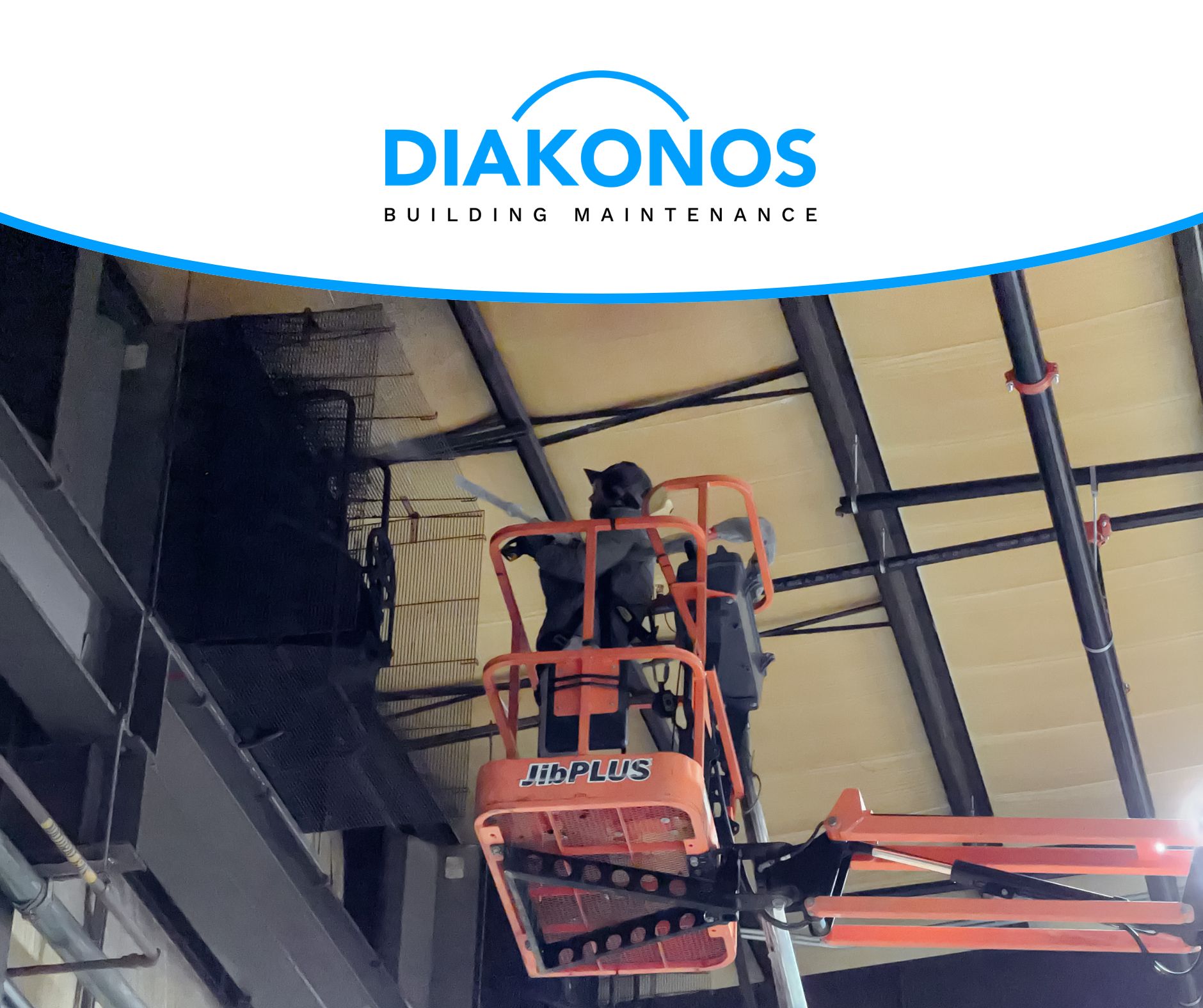
Dry Ice Blasting: Using our Cold Jet Aero 40 FP system, we direct CO₂ pellets at contaminated surfaces with precision. The dry ice freezes contaminants, kinetic energy breaks them loose, and sublimation lifts debris away. Throughout the process, you'll see years of buildup disappearing while the equipment beneath emerges clean and undamaged.
Final Cleanup: Once blasting is complete, we remove the dislodged debris—the only waste product from the entire process. We perform a final inspection to ensure your equipment meets cleanliness standards and is ready for operation.
Equipment Ready: This is where dry ice blasting really shines. There's no waiting for surfaces to dry, no curing time for coatings or treatments, and no secondary cleanup of blast media. Your equipment is immediately ready to go back online, putting you back in production in a fraction of the time traditional methods would require.
Clean Equipment, Zero Compromise
If your Knoxville or Maryville facility has been struggling with equipment cleaning that creates too much downtime, risks component damage, or generates excessive waste, dry ice blasting offers a better solution. It's the cleaning method that doesn't force you to choose between thoroughness and efficiency, between deep cleaning and equipment protection, between getting machinery clean and getting it back online quickly.
Diakonos Building Maintenance brings dry ice blasting expertise to industrial facilities throughout East Tennessee. Whether you're dealing with manufacturing equipment covered in years of grease, electrical motors that need deep cleaning without moisture exposure, or ventilation systems clogged with debris, we have the equipment and experience to deliver results.
Contact us today for a free consultation to assess whether dry ice blasting is the right solution for your facility's cleaning challenges. Let's talk about your specific equipment, your contamination issues, and how dry ice blasting can help you maintain cleaner machinery with less downtime and lower costs.
Your equipment deserves cleaning that's as advanced as the machinery itself. Dry ice blasting delivers exactly that—and leaves nothing behind but results.
Ready for a facility that always feels clean, safe, and taken care of?
Reliable janitorial and building maintenance from a local Knoxville team you’ll actually enjoy working with. Schedule your free walkthrough and custom quote - takes about 30 minutes, zero pressure.